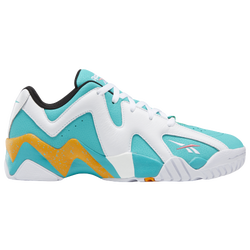
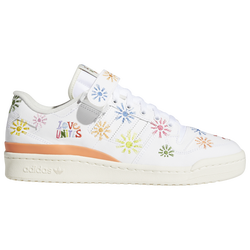
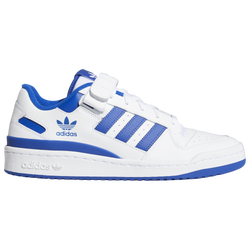
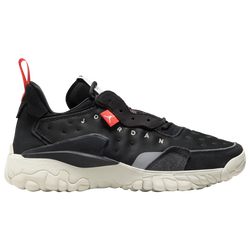
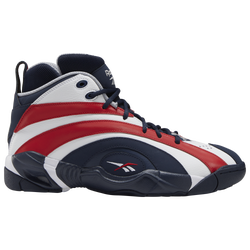
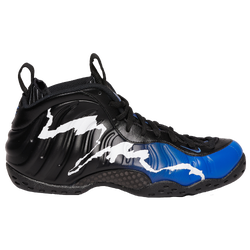
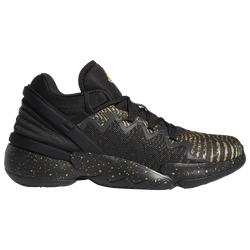
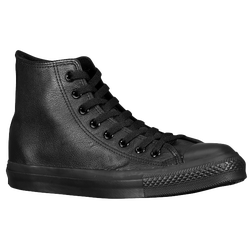
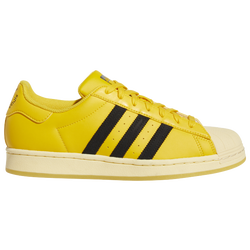
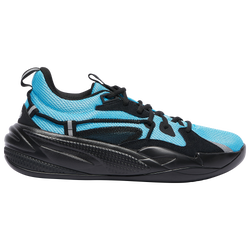
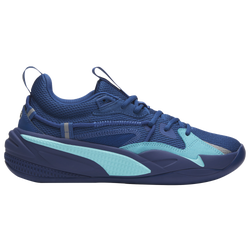
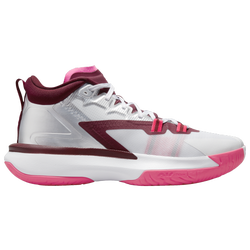
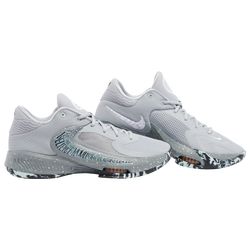
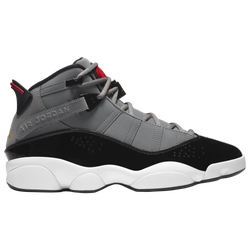
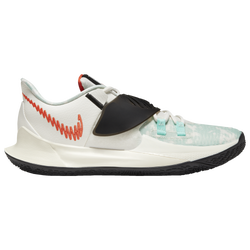
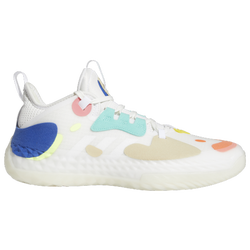
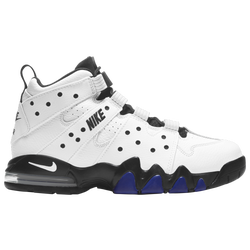
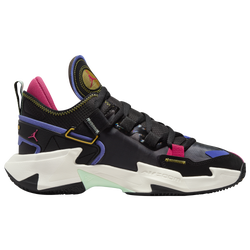
A quick scroll through your options will tell you why. You want to represent a player you love to watch, or maybe you respect his off-court presence. Or maybe he just has the dopest shoes in the game. Whatever matters most to you, you’ll find something to help you tell your own story.
Nike has typically found itself on the feet of stars, from Michael Jordan to Kobe Bryant to LeBron James and beyond. adidas has its 3-Stripes logo on the feet of MVP-caliber stars James Harden and Damian Lillard. If long-distance sniping and overall toughness is your thing, Under Armour’s got you with its Stephen Curry signature line.
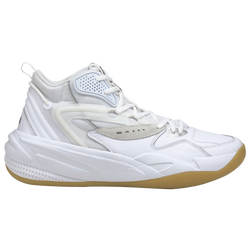
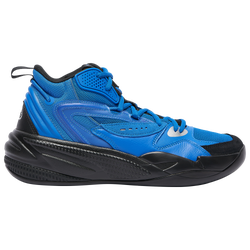
The Jordan brand has hung out at the corner of luxury and performance since 1985. And while PUMA got its first endorsement in 1973 and has remained a street staple ever since, the German athletic legend has returned to the hardwood with the PUMA Clyde Court collection.
Stars burning bright
Pausing your DVR might be the only way to stop some of the biggest names in the game. And if you do, you might be able to make out the logos on the feet of Boston’s Kyrie Irving, James out in L.A., Paul George in Oklahoma City, Lillard on the coast in Portland, or Curry by the Bay.
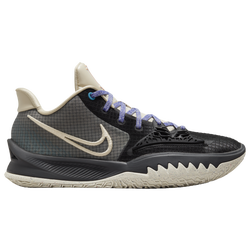
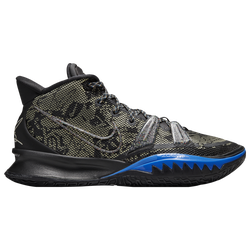
The Nike Kyrie line is designed with the point guard’s slashing moves in mind. It’s built up on the sides to cradle your foot, and every edition since the Kyrie 2 has featured some variation on a strap to keep your foot lashed to the footbed. That forward-thinking feature has also allowed for interesting colorblocking.
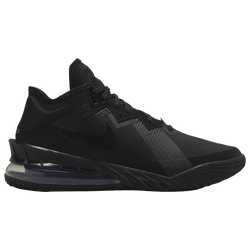
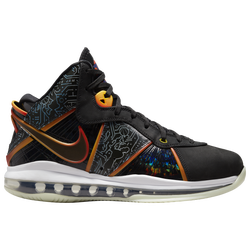
The Nike LeBron is built to cushion big players with even bigger game. Visible Zoom Air cushioning keeps you close to the court, and a BattleKnit upper – for the second straight version – adds natural flexibility and a visually interesting texture to an already durable build.
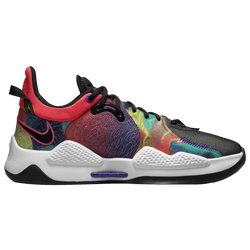
George’s success has drawn from, and contributed to, the evolution of the Nike PG series. Designer Tony Hardman sought to strip away the unnecessary, make each step more efficient, and stylistically connect with George’s past by incorporating numbers pertinent to his life – his birthdate, uniform numbers, and more.
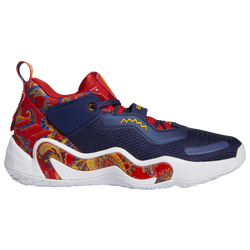
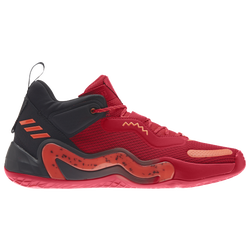
A midfoot banking barrier gives the adidas Dame 5 additional support on the point guard’s typical lightning cuts. It also adds an interesting visual block that instantly sets you apart.
Then there’s Curry, the last opponent you would want to see with the ball when the score is close and the clock is ticking down. But if you’re on Team Curry, you may want to check out the Under Armour Curry 6.
Old school is always in session
Don’t forget about the giants on whose shoulders the stars of today stand.
Kobe Bryant walked away in 2016, but Nike Kobe shoes include the A.D., which keep his presence alive and well on the courts and in the streets. His low-cut silhouettes have always worn well with a variety of looks.
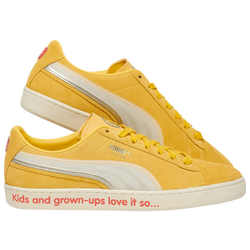
PUMA honored Walt “Clyde” Frazier with the first endorsement deal in the modern era when it debuted the PUMA Clyde on basketball courts in 1973. It’s been a street staple ever since, in countless colourways and in materials that must be felt to be believed. But PUMA has returned to active status with the PUMA Clyde Court series. Modern flexible uppers and dynamic lacing will put you in the game with a look that is uniquely you.
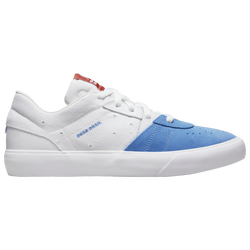
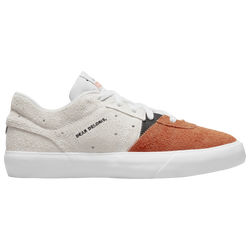
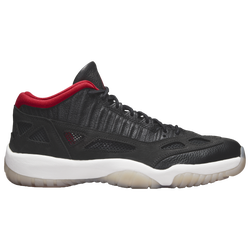
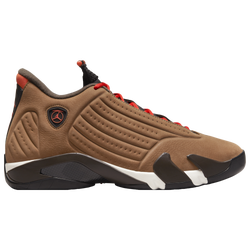
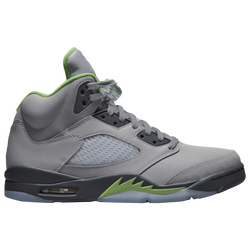
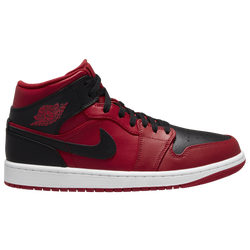
Jordan. You’ve known the name for as long as you can remember because Michael Jordan has been the first and last name in domination. He conquered the courts from 1985 through 2003, and “His Airness” remains the top seed in the shoe game. Re-released “retros” such as the Jordan Retro 5, Retro 8, and Retro 10 let you own a piece of MJ’s legacy, as every shoe tells a story.
For the Retro 5, designer Tinker Hatfield drew inspiration from a World War II fighter plane – the P-51 Mustang – a nod to Jordan’s speed, power, and ferocious competitiveness.
The Retro 8 features a carpeted Jumpman logo on the tongue, the only such appearance in the line, and the first lace shroud, which serves as a lockdown mechanism for serious ballers.
Jordan’s Retro 10 tells the story of MJ’s career to that point. The outsole lists his career accomplishments prior to 1995. Which, incidentally, was when Jordan returned from his brief baseball-inspired retirement to resume bringing championships home to Chicago.