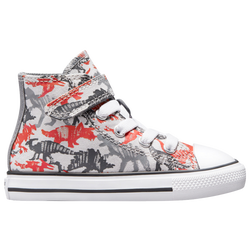
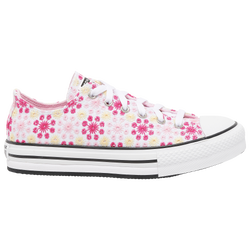
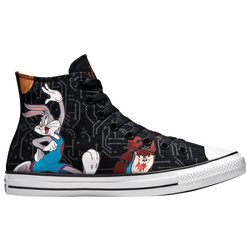
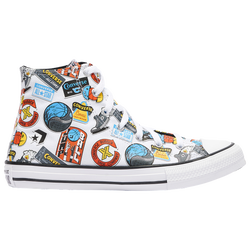
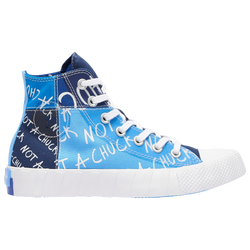
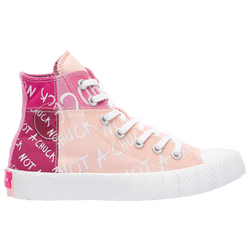
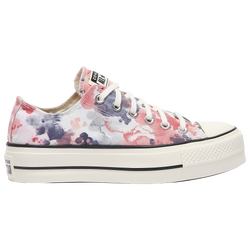
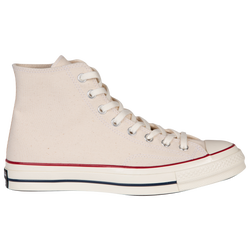
When Marquis Mills Converse founded a company in 1908 that began providing rubber shoes for men, women, and children, he probably never imagined his last name would one day be known as a staple of a worldwide sneaker culture.
But here we are.
The Converse Rubber Shoe Co. of Malden, Mass., began turning its attention to rubber-soled shoes for athletic usage in 1917. Shortly after, a fellow named Chuck Taylor walked into Converse’s shop complaining of sore feet. Converse not only hooked him up with a pair of shoes but with a job as well, as a salesman and advocate for the shoemaker.
And the rest, as they say, is sneaker history.
Sign on the Times
Converse put Taylor’s signature on the side of its canvas-upper athletic shoe in 1932, it appeared in the 1936 Berlin games, and Taylor advocated for the shoe until his death in 1969. The shoe itself became the bedrock of American sports, the generally accepted all-purpose silhouette of an athletic shoe. It appeared in cartoons. The first and only time 100 points was scored in a professional game, on March 2, 1962, it was done wearing the Converse Chuck Taylor All Star.
The low-cut version of the All Star debuted in 1957, ensuring an option for anyone – men, women, and kids alike – to wear with virtually anything.
From the Courts to the Streets
As other brands and styles began to take hold on basketball courts and other fields of play, Converse began to realize increasing popularity away from sports. The brand had actually begun taking on a “rebellious” sort of tone as far back as the 1950s, with icons like James Dean rocking them with his jeans and leather jacket. But the shoe began to gain a stronger foothold in those “lifestyle” circles as punk and grunge bands adopted the footwear in the 1980s and ’90s.
When Nike acquired Converse in 2003, it opened up even further design and tech options for a shoe that had become famous for being decidedly low tech. Variations have included the chunky “lugged” outsole, Lunarlon dual-density foam midsoles, and collaborations that have brought a variety of visual variants.